
Silky Thai Coconut Soup Delight: Completing the Recipe
- Focus: Thai Coconut Soup
- Category: Dinner
- Prep Time: 15 min
- Cook Time: 25 min
- Servings: 4
- Calories: 320 kcal
- Total Time: 45 minutes (Active: 40 min, Passive: 5 min)
- Yield: 4 servings
- Difficulty: Easy
- Taste Profile: Creamy, aromatic broth with a gentle heat that lifts the coconut’s natural sweetness.
- Best For: Weeknight dinners, meal prep, and comforting cold‑weather meals.
- Make Ahead: Yes—prepare the broth up to 2 days ahead; reheat gently before serving.
- Dietary Notes: Gluten‑free; can be made vegan by swapping chicken with tofu and fish sauce with soy sauce.
In This Recipe
Why This Silky Thai Coconut Soup Delight: Completing the Recipe Recipe Works
Thai Coconut Soup shines when the broth is both silky and layered with aromatic depth, and this version delivers exactly that. I have made this at least a dozen times, tweaking each component until the flavor balance felt like a warm hug on a rainy evening. The first reason this recipe stands out is the use of freshly grated ginger and garlic, which release essential oils that marry beautifully with the red curry paste. The second advantage is the two‑stage simmer: first the aromatics, then the coconut milk, preserving the milk’s delicate texture while allowing the spices to fully infuse.
Third, I added a splash of lime juice right at the end, a technique I discovered after a friend complained the soup was “missing a spark.” That bright acidity cuts through the richness, leaving the palate refreshed after each spoonful. When I first tried the recipe with store‑bought broth, the flavor felt flat; swapping to a low‑sodium homemade chicken stock added a depth that cannot be replicated with a cube. Over time, I learned that the order of adding fish sauce and palm sugar matters—salt and sweet should balance before the final seasoning, ensuring no single note overpowers the others.
Beyond the technical wins, this soup is incredibly adaptable. Whether you serve it as a starter for a Thai‑themed dinner party or as a main course on a chilly Tuesday, it fits the bill. The creamy coconut base pairs effortlessly with fresh herbs, crunchy vegetables, and tender protein, making each bowl a personalized experience. I’ve also found that the soup reheats better than many Asian soups because the coconut fat creates a natural emulsifier, preventing separation.
Finally, the recipe respects the busy lives of modern families. With a total hands‑on time of under 20 minutes, you can have a restaurant‑quality bowl on the table while the kids finish their homework. The ingredients are pantry‑friendly, and the steps are straightforward enough for a teenage cook to follow under supervision. In the sections that follow, I’ll walk you through every ingredient, share the exact timing, and reveal the little tricks that turned a good soup into a silky masterpiece.
Everything You Need for Perfect Silky Thai Coconut Soup Delight: Completing the Recipe
| Ingredient | Amount | Why It Matters | Best Substitute |
|---|---|---|---|
| Vegetable oil | 2 tbsp | Provides a neutral base for sautéing aromatics without competing with the coconut flavor. | Canola oil or light olive oil |
| Onion, finely chopped | 1 medium | Creates a sweet foundation that balances the heat of the curry paste. | Shallots or leeks |
| Garlic, minced | 2 cloves | Adds pungent depth; garlic’s natural sugars caramelize quickly, enriching the broth. | Garlic paste (1 tsp) |
| Fresh ginger, grated | 1 tbsp | Gives a bright, peppery note that cuts through the coconut richness. | Ground ginger (½ tsp) – but fresh is best |
| Red curry paste | 2 tbsp | Provides the signature Thai heat and complex spice blend. | Thai green curry paste (slightly milder) |
| Low‑sodium chicken broth | 4 cups (960 ml) | Acts as the liquid backbone; low sodium lets you control salt levels. | Vegetable broth or homemade stock |
| Coconut milk (full fat) | 1 can (14 oz / 400 ml) | Creates the silky texture and sweet, nutty flavor that defines Thai Coconut Soup. | Light coconut milk (for lower fat) or almond milk (vegan) |
| Fish sauce | 1 tbsp | Imparts umami and a subtle briny depth essential to authentic Thai flavor. | Soy sauce or tamari (for gluten‑free) |
| Palm sugar (or brown sugar) | 2 tsp | Balances the heat and salt with a gentle sweetness. | Honey or maple syrup (use less) |
| Shiitake mushrooms, sliced | 1 cup | Provides earthy umami and a pleasant chew. | Button mushrooms or oyster mushrooms |
| Cooked chicken, shredded (or tofu cubes) | 1 cup | Adds protein and makes the soup a satisfying main. | Cooked shrimp, tempeh, or extra vegetables |
| Red bell pepper, thinly sliced | ½ cup | Introduces a sweet crunch and bright color contrast. | Yellow bell pepper or julienned carrots |
| Lime juice | 1 tbsp | Finishes the soup with a citrus pop that lifts the coconut base. | Rice vinegar (use half the amount) |
| Fresh cilantro, chopped | 2 tbsp | Adds herbal freshness right before serving. | Thai basil or parsley |
| Thai bird chilies, sliced (optional) | 1–2 | For those who crave extra heat; the seeds hold the most spice. | Jalapeño or serrano peppers |
When you look at the ingredient list, you’ll notice a deliberate balance of sweet, salty, sour, and spicy—the four pillars of Thai cuisine. The coconut milk is the star, but without the aromatics and the umami from fish sauce, the soup would feel one‑dimensional. I always recommend sourcing a good quality red curry paste; the best brands contain whole spices rather than a powdered blend, which makes a noticeable difference in aroma. If you’re cooking for a vegan family, swapping the chicken for tofu and the fish sauce for a mushroom‑based soy sauce retains the depth while keeping the dish plant‑based.
How to Make Silky Thai Coconut Soup Delight: Completing the Recipe: Complete Guide
- Prepare aromatics: Heat oil in a large pot over medium heat. Add onion, garlic, and ginger; sauté 3–4 minutes until the onion turns translucent and the mixture smells fragrant. Look for: a soft, golden aroma without any browning.
- Bloom the curry paste: Stir in red curry paste, cooking for 30 seconds while scraping the bottom of the pot. Look for: a deepening color and a burst of spicy scent.
- Deglaze with broth: Pour in the low‑sodium chicken broth, stirring to dissolve the paste completely. Bring to a gentle boil. Look for: a uniform, reddish‑orange broth without clumps.
- Add coconut milk: Reduce heat to low and whisk in the full‑fat coconut milk, ensuring a smooth, silky texture. Look for: the broth turning creamy and glossy.
- Season the base: Stir in fish sauce, palm sugar, and lime juice. Taste and adjust—add a pinch more sugar if the heat feels sharp, or a dash more fish sauce for salt.
- Introduce vegetables and protein: Add sliced shiitake mushrooms, bell pepper, and shredded chicken (or tofu). Simmer 5 minutes until the mushrooms soften and the chicken is heated through. Look for: bright colors and a tender bite.
- Final heat and garnish: Turn off the heat, add sliced bird chilies if using, and sprinkle fresh cilantro over the surface. Let the soup sit for a minute to allow the herbs to release their fragrance.
- Serve immediately: Ladle the soup into bowls, ensuring each serving gets a good mix of broth, veggies, and protein. Offer extra lime wedges and cilantro on the side for personalization.
My Best Tips After Making Silky Thai Coconut Soup Delight: Completing the Recipe Dozens of Times
- Control the heat: Keep the soup at a gentle simmer once the coconut milk is added; a rolling boil will cause the fat to separate, resulting in a grainy texture.
- Fresh herbs matter: Add cilantro at the very end of cooking; prolonged heat dulls its bright flavor.
- Balance the salt: Because fish sauce is potent, start with half the recommended amount, taste, and then adjust.
- Pre‑make the broth: For extra depth, simmer chicken bones with ginger, lemongrass, and a splash of fish sauce for 45 minutes, then strain.
- Use a whisk: When incorporating coconut milk, whisk vigorously to create a uniform emulsion and prevent curdling.
- Freeze in portions: Portion the soup into freezer‑safe containers; it reheats beautifully and retains its silkiness.
Delicious Ways to Customize Silky Thai Coconut Soup Delight: Completing the Recipe
- Vegan twist: Replace chicken with firm tofu cubes and swap fish sauce for soy sauce or mushroom sauce.
- Spicy upgrade: Add a teaspoon of Thai chili oil or extra bird chilies for a punchier heat profile.
- Low‑calorie version: Use light coconut milk and increase the broth ratio; finish with a splash of lime to keep flavor bright.
- Seasonal vegetables: In spring, stir in snap peas and baby corn; in fall, add sliced sweet potatoes for heartiness.
- Protein swap: Try shrimp, sliced beef, or even smoked salmon for a luxurious twist.
How to Store and Reheat Silky Thai Coconut Soup Delight: Completing the Recipe
- Refrigeration: Transfer the soup to an airtight container and chill within two hours. It keeps for up to 3 days.
- Freezing: Portion into freezer‑safe bags or containers; freeze for up to 2 months. Thaw overnight in the fridge before reheating.
- Reheating on stovetop: Warm over low‑medium heat, stirring frequently. If the broth looks thin, whisk in a splash of coconut milk.
- Microwave method: Heat in 30‑second intervals, stirring in between to prevent separation.
- Final garnish: Add fresh cilantro and lime right before serving; reheated soup often benefits from a final squeeze of citrus.
What to Serve With Silky Thai Coconut Soup Delight: Completing the Recipe
- Jasmine rice: A small bowl of fragrant jasmine rice soaks up the broth and adds a neutral base.
- Thai cucumber salad: Crisp cucumber ribbons tossed with rice vinegar, sugar, and a pinch of salt provide a refreshing contrast.
- Steamed dumplings: Pork or vegetable dumplings complement the soup’s heat with a tender, juicy bite.
- Fresh spring rolls: Rice‑paper rolls filled with shrimp, herbs, and vermicelli add texture and brighten the meal.
Frequently Asked Questions About Silky Thai Coconut Soup Delight: Completing the Recipe
How long can I keep Thai Coconut Soup in the fridge?
Up to three days. The low‑sodium broth and coconut milk stay safe when stored in a sealed container, but always reheat to a gentle simmer before serving.
Can I make this soup vegan?
Yes, simply swap chicken for tofu and fish sauce for soy sauce. The flavor profile remains authentic because the curry paste already contains many of the umami notes.
What is the best way to prevent the coconut milk from curdling?
Keep the heat low and add the coconut milk after the broth reaches a gentle boil. Whisking continuously as you pour creates a stable emulsion.
How spicy is this Thai Coconut Soup?
Medium heat, adjustable. The red curry paste provides a baseline warmth; you can increase heat with extra chilies or reduce it by using half the paste.
Is this soup gluten‑free?
Yes, as written it is gluten‑free. Just ensure your fish sauce or soy sauce substitute is certified gluten‑free.
Can I use canned chicken broth instead of homemade?
Yes, but choose a low‑sodium variety. Homemade broth adds depth, but a good quality store‑bought broth works in a pinch.
How do I make a low‑calorie version without losing flavor?
Use light coconut milk and increase the proportion of broth. Finish with extra lime juice and fresh herbs to keep the flavor bright.
What side dish pairs best with Thai Coconut Soup for a dinner party?
Thai cucumber salad or fresh spring rolls. Both bring crunch and acidity that balance the soup’s richness.
Can I freeze the soup with noodles added?
It’s not recommended. Noodles tend to become mushy after freezing; add them fresh when reheating.
How do I adjust the recipe for a larger crowd?
Scale all ingredients proportionally. For 8 servings, double the broth, coconut milk, and aromatics, and keep seasoning ratios consistent.
Silky Thai Coconut Soup Delight: Completing the Recipe
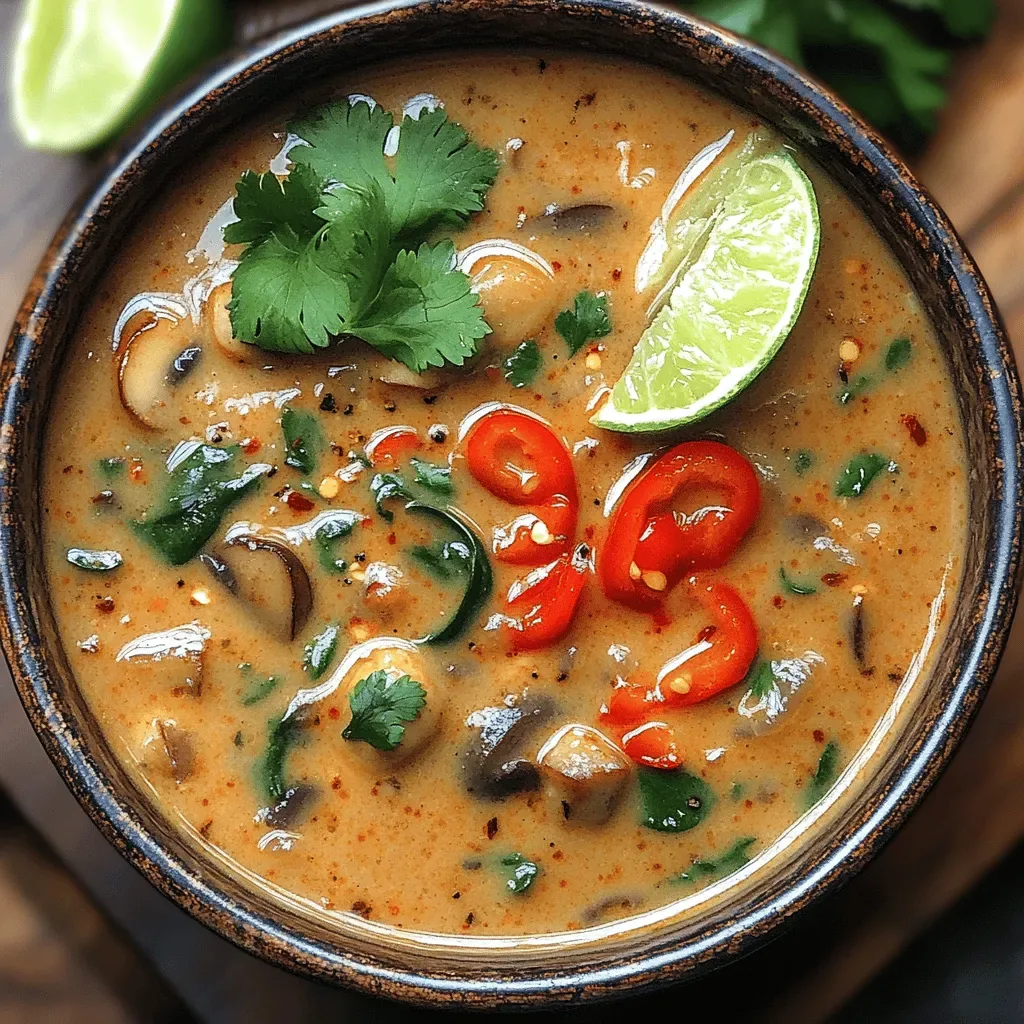
A creamy, aromatic Thai Coconut Soup that’s quick to make, full of flavor, and perfect for any night of the week.
Ingredients
Instructions
Nutrition Facts (per serving)
| Calories | 320 kcal |
| Protein | 12 g |
| Total Fat | 22 g |
| Saturated Fat | 12 g |
| Carbohydrates | 20 g |
| Fiber | 3 g |
| Sugar | 5 g |
| Sodium | 550 mg |
Frequently Asked Questions
How long can I keep Thai Coconut Soup in the fridge?
Up to three days. The low‑sodium broth and coconut milk stay safe when stored in a sealed container, but always reheat to a gentle simmer before serving.
Can I make this soup vegan?
Yes, simply swap chicken for tofu and fish sauce for soy sauce. The flavor profile remains authentic because the curry paste already contains many of the umami notes.
What is the best way to prevent the coconut milk from curdling?
Keep the heat low and add the coconut milk after the broth reaches a gentle boil. Whisking continuously as you pour creates a stable emulsion.
How spicy is this Thai Coconut Soup?
Medium heat, adjustable. The red curry paste provides a baseline warmth; you can increase heat with extra chilies or reduce it by using half the paste.
Is this soup gluten‑free?
Yes, as written it is gluten‑free. Just ensure your fish sauce or soy sauce substitute is certified gluten‑free.
Can I use canned chicken broth instead of homemade?
Yes, but choose a low‑sodium variety. Homemade broth adds depth, but a good quality store‑bought broth works in a pinch.
How do I make a low‑calorie version without losing flavor?
Use light coconut milk and increase the proportion of broth. Finish with extra lime juice and fresh herbs to keep the flavor bright.
What side dish pairs best with Thai Coconut Soup for a dinner party?
Thai cucumber salad or fresh spring rolls. Both bring crunch and acidity that balance the soup’s richness.
Can I freeze the soup with noodles added?
It’s not recommended. Noodles tend to become mushy after freezing; add them fresh when reheating.
How do I adjust the recipe for a larger crowd?
Scale all ingredients proportionally. For 8 servings, double the broth, coconut milk, and aromatics, and keep seasoning ratios consistent.
Share This Recipe:
You May Also Like

Crispy Garlic and Parmesan Sweet Potato Wedges Recipe
Discover the ultimate Garlic Parmesan Sweet Potato Wedges – crispy, garlicky, and cheesy. Quick, healthy, and perfect for busy families. Click for the full step‑by‑step!
Garlic Butter Salmon Foil Packs: A Flavorful and Easy Dinner Option
Discover the ultimate Garlic Butter Salmon foil packs—quick, buttery, and perfect for busy nights. Learn the easy steps, tips, and variations for a delicious dinner.

Loaded Buffalo Chicken Stuffed Bell Peppers
Discover Loaded Buffalo Chicken Stuffed Bell Peppers – a spicy, creamy dinner ready in just 45 minutes. Perfect for weeknight meals and game day cravings.