
Baked Falafel Power Bowls: Transforming Your Meals with Flavor and Nutrition
- Focus: Baked Falafel
- Category: Dinner
- Prep Time: 15 min
- Cook Time: 30 min
- Servings: 4
- Calories: 380 kcal
- Total Time: 50 minutes (Active: 20 min, Passive: 30 min)
- Yield: 4 servings
- Difficulty: Easy
- Taste Profile: Crispy golden falafel nuggets nestled in a vibrant herb‑laden bowl that sings of citrus and earth.
- Best For: Weeknight dinners, Meal prep, Family lunches
- Make Ahead: Yes – falafel mixture can be prepared up to 24 hours ahead.
- Dietary Notes: Vegan, Gluten‑Free (when using GF flour), High‑Protein
In This Recipe
Why This Baked Falafel Power Bowls: Transforming Your Meals with Flavor and Nutrition Recipe Works
Baked Falafel power bowls deliver a crunchy, protein‑packed meal without the deep‑fried guilt. I first discovered this approach on a rainy Tuesday when I was craving the classic street‑food falafel but didn’t want to fire up the fryer. After testing several oven temperatures, I realized that a hot, dry bake at 400°F (200°C) gives the falafel a caramelized crust while keeping the interior moist and tender. The result is a bowl that feels indulgent yet stays light enough for a weekday dinner.
My kitchen has become a little laboratory for this dish. I’ve made it at least a dozen times, tweaking the herb ratios, experimenting with different flours, and even swapping chickpeas for white beans on a whim. Each iteration taught me something new about texture, flavor balance, and how to keep the bowl looking bright and appetizing after reheating. The final version I’m sharing today combines the best of those experiments into a reliable, family‑friendly recipe.
There are three specific reasons this baked version outshines the traditional fried falafel bowl. First, the oven‑bake method reduces oil by up to 80%, which means fewer calories and less mess. Second, the bowl format lets you layer colorful vegetables, creamy tahini, and a citrusy drizzle, turning a simple protein into a complete, balanced meal. Third, the recipe is built for make‑ahead: you can form the falafel balls, freeze them, and pop them in the oven whenever you need a quick dinner, making it perfect for busy families.
Imagine the aroma of cumin and fresh parsley filling your kitchen as the falafel turns golden, the crunch audible when you bite into it, and the bright zing of lemon‑tahini sauce tying everything together. That sensory experience is what makes this bowl a go‑to for me on hectic nights and why I’m confident it will become yours, too. Let’s dive into the details, so you can recreate that satisfying crunch and vibrant flavor at home.
Everything You Need for Perfect Baked Falafel Power Bowls: Transforming Your Meals with Flavor and Nutrition
| Ingredient | Amount | Why It Matters | Best Substitute |
|---|---|---|---|
| Dry chickpeas | 1 ½ cups (about 300 g) | Provides the base protein and creates a fluffy interior when soaked. | Canned chickpeas (drained, but reduce baking time) |
| Red onion, roughly chopped | ½ cup | Adds sweetness and moisture to the mixture. | Sweet yellow onion |
| Garlic cloves, minced | 3 large | Gives the classic garlicky punch that defines falafel. | 1 tsp garlic powder |
| Fresh parsley, tightly packed | ½ cup | Bright herb flavor and a vivid green color. | Fresh cilantro or a mix of both |
| Fresh cilantro, tightly packed | ½ cup | Balances parsley with citrusy notes. | Extra parsley |
| Ground cumin | 2 tsp | Warm, earthy backbone of the flavor profile. | Ground coriander (use 1 tsp) |
| Ground coriander | 1 tsp | Subtle citrus nuance that lifts the dish. | Additional cumin (½ tsp) |
| Baking powder | ½ tsp | Creates a light interior by releasing steam. | Club soda (1 tbsp, added to mixture) |
| Gluten‑free all‑purpose flour | 2 tbsp | Helps bind the mixture without adding gluten. | Regular all‑purpose flour (if gluten isn’t a concern) |
| Olive oil (for drizzling) | 2 tbsp | Promotes browning and adds a fruity richness. | Avocado oil |
| Lemon juice | 1 tbsp | Brightens the flavor and balances earthiness. | Apple cider vinegar (½ tbsp) |
| Sea salt | 1 tsp | Enhances all the other flavors. | Kosher salt |
| Freshly ground black pepper | ½ tsp | Adds a subtle heat. | White pepper |
How to Make Baked Falafel Power Bowls: Transforming Your Meals with Flavor and Nutrition: Complete Guide
- Soak the chickpeas: Place the dry chickpeas in a large bowl, cover with cold water, and let them soak for at least 12 hours (or overnight). Look for: The beans should have doubled in size and feel soft to the touch.
- Drain and rinse: After soaking, drain the chickpeas and rinse under cool water. Look for: No residual water clinging to the beans; they should be dry enough to pat with a kitchen towel.
- Blend the base: In a food processor, combine soaked chickpeas, red onion, garlic, parsley, cilantro, cumin, coriander, baking powder, flour, lemon juice, salt, and pepper. Pulse until the mixture is coarse yet holds together when pressed. Look for: A grainy texture; avoid over‑processing into a paste.
- Chill the mixture: Transfer the blend to a bowl, cover, and refrigerate for 30 minutes. Look for: The mixture should firm up, making it easier to shape.
- Form falafel balls: Using a tablespoon or a falafel scoop, roll the mixture into 1‑inch balls. Place them on a parchment‑lined baking sheet. Look for: Uniform size for even baking.
- Drizzle with oil: Lightly brush each ball with olive oil (or drizzle and toss). Look for: A thin sheen that will promote browning.
- Bake: Preheat the oven to 400°F (200°C). Bake the falafel for 25‑30 minutes, turning halfway through. Look for: A deep golden‑brown crust and a fragrant, nutty aroma.
- Prepare the bowl base: While the falafel bakes, toss mixed greens, shredded carrots, sliced cucumber, cherry tomatoes, and cooked quinoa (or brown rice) with a splash of lemon juice and a pinch of salt.
- Make the tahini drizzle: Whisk together ¼ cup tahini, 2 tbsp warm water, 1 tbsp lemon juice, 1 tsp maple syrup, and a pinch of salt until smooth. Look for: A pourable consistency; add more water if too thick.
- Assemble the bowls: Divide the grain‑vegetable mixture among four bowls, top with baked falafel, drizzle generously with tahini sauce, and finish with a sprinkle of fresh herbs and a wedge of lemon.
My Best Tips After Making Baked Falafel Power Bowls: Transforming Your Meals with Flavor and Nutrition Dozens of Times
- Dry the chickpeas thoroughly: After soaking, pat them dry with a clean kitchen towel. Excess moisture leads to a soggy crust.
- Use a cold oven start: Placing the falafel in a cold oven and then turning it on helps the exterior set gradually, reducing cracks.
- Don’t overcrowd the pan: Give each ball room to breathe. Crowding traps steam and prevents crispness.
- Finish with a high‑heat broil: For an extra crunch, switch the oven to broil for the last 2 minutes, watching closely to avoid burning.
- Season the tahini sauce: Add a pinch of smoked paprika or a dash of hot sauce for depth.
- Layer textures: Add toasted pumpkin seeds or toasted pine nuts just before serving for an unexpected crunch.
Delicious Ways to Customize Baked Falafel Power Bowls: Transforming Your Meals with Flavor and Nutrition
- Spicy Kick: Mix ½ tsp cayenne pepper into the falafel blend and drizzle sriracha‑infused tahini for heat lovers.
- Seasonal Veg: Swap cucumber and carrots for roasted autumn squash, Brussels sprouts, and pomegranate seeds for a fall‑inspired bowl.
- Protein Boost: Add a scoop of marinated tempeh or grilled halloumi cubes for extra protein without changing the vegan base.
- Grain‑Free Option: Replace quinoa with cauliflower rice, seasoned with lime zest, for a low‑carb version.
- Kid‑Friendly Sweetness: Toss the bowl with a honey‑lime dressing (use agave for vegans) and add sweet corn kernels for a sweeter palate.
How to Store and Reheat Baked Falafel Power Bowls: Transforming Your Meals with Flavor and Nutrition
- Refrigerator (up to 4 days): Store falafel in an airtight container separate from greens to keep them crisp. Reheat on a baking sheet at 350°F (175°C) for 10‑12 minutes.
- Freezer (up to 2 months): Freeze uncooked falafel balls on a tray, then transfer to a zip‑top bag. Bake from frozen at 425°F (220°C) for 30‑35 minutes.
- Reheating greens: Toss fresh greens with a splash of olive oil and lemon right before serving; they stay vibrant even after the bowl sits for a few hours.
- Prevent sogginess: Keep the tahini sauce in a separate small container and drizzle just before eating.
What to Serve With Baked Falafel Power Bowls: Transforming Your Meals with Flavor and Nutrition
- Mint‑yogurt sauce: A cool, creamy contrast that adds a tangy finish.
- Pickled red cabbage: Adds acidity and crunch, balancing the richness of the falafel.
- Warm pita wedges: Perfect for scooping extra tahini or dipping into the falafel crumbs.
- Fresh fruit salad: A light, sweet palate cleanser—think orange segments, pomegranate seeds, and a drizzle of honey.
Frequently Asked Questions About Baked Falafel Power Bowls: Transforming Your Meals with Flavor and Nutrition
How do I get the perfect crisp on baked falafel?
Use a hot oven (400°F) and lightly brush each ball with oil. The high heat creates Maillard reactions that form a golden crust, while the oil promotes even browning without deep‑frying.
Can I use canned chickpeas instead of dry?
You can, but the texture will be denser. If you opt for canned, rinse well, pat dry, and add an extra 1 tbsp of flour to help bind the mixture.
Is it necessary to chill the falafel mixture?
Yes, chilling for at least 30 minutes helps the mixture firm up. This prevents the balls from falling apart during baking and improves the final texture.
What’s the best gluten‑free flour for this recipe?
Use a 1:1 gluten‑free all‑purpose blend. It provides the same binding power as wheat flour without altering flavor.
Can I add other spices like smoked paprika?
Absolutely. Adding smoked paprika, sumac, or even a pinch of cinnamon can give the falafel a unique twist that still pairs well with the tahini drizzle.
How far ahead can I prepare the bowl components?
You can prep all components up to 24 hours in advance. Keep the falafel, grains, and veggies separate; assemble just before serving for maximum freshness.
Is the tahini sauce safe to store?
Yes, store the sauce in a sealed jar for up to 5 days in the fridge. Stir well before each use; it may thicken as it cools.
What if I don’t have a food processor?
Use a high‑speed blender or manually mash the ingredients. The goal is a coarse, cohesive mixture; a few extra minutes of hand‑mashing will do.
Can I make this recipe vegan and still get enough protein?
Definitely. Chickpeas provide about 15 g of protein per serving, and you can boost it with quinoa, tempeh, or a sprinkle of hemp seeds.
How do I adjust the recipe for a larger crowd?
Scale all ingredients proportionally. For 8 servings, double everything and use two baking sheets to avoid crowding.
Baked Falafel Power Bowls: Transforming Your Meals with Flavor and Nutrition
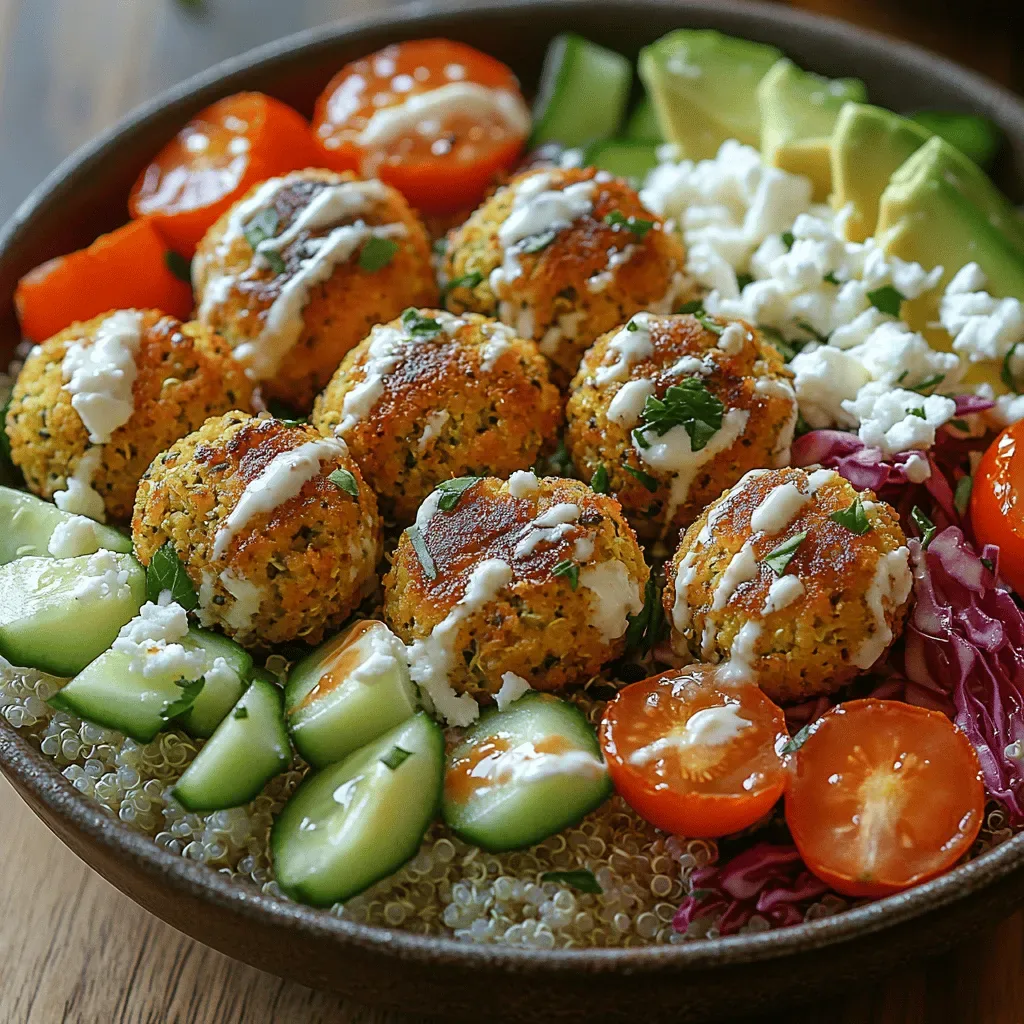
A vibrant, protein‑rich bowl featuring crispy baked falafel, fresh herbs, and a silky lemon‑tahini drizzle—perfect for weeknight meals or meal‑prep.
Ingredients
Instructions
Nutrition Facts (per serving)
| Calories | 380 kcal |
| Protein | 15 g |
| Total Fat | 12 g |
| Saturated Fat | 2 g |
| Carbohydrates | 45 g |
| Fiber | 10 g |
| Sugar | 5 g |
| Sodium | 350 mg |
Frequently Asked Questions
How do I get the perfect crisp on baked falafel?
Use a hot oven (400°F) and lightly brush each ball with oil. The high heat creates Maillard reactions that form a golden crust, while the oil promotes even browning without deep‑frying.
Can I use canned chickpeas instead of dry?
You can, but the texture will be denser. If you opt for canned, rinse well, pat dry, and add an extra 1 tbsp of flour to help bind the mixture.
Is it necessary to chill the falafel mixture?
Yes, chilling for at least 30 minutes helps the mixture firm up. This prevents the balls from falling apart during baking and improves the final texture.
What’s the best gluten‑free flour for this recipe?
Use a 1:1 gluten‑free all‑purpose blend. It provides the same binding power as wheat flour without altering flavor.
Can I add other spices like smoked paprika?
Absolutely. Adding smoked paprika, sumac, or even a pinch of cinnamon can give the falafel a unique twist that still pairs well with the tahini drizzle.
How far ahead can I prepare the bowl components?
You can prep all components up to 24 hours in advance. Keep the falafel, grains, and veggies separate; assemble just before serving for maximum freshness.
Is the tahini sauce safe to store?
Yes, store the sauce in a sealed jar for up to 5 days in the fridge. Stir well before each use; it may thicken as it cools.
What if I don’t have a food processor?
Use a high‑speed blender or manually mash the ingredients. The goal is a coarse, cohesive mixture; a few extra minutes of hand‑mashing will do.
Can I make this recipe vegan and still get enough protein?
Definitely. Chickpeas provide about 15 g of protein per serving, and you can boost it with quinoa, tempeh, or a sprinkle of hemp seeds.
How do I adjust the recipe for a larger crowd?
Scale all ingredients proportionally. For 8 servings, double everything and use two baking sheets to avoid crowding.
Share This Recipe:
You May Also Like

Spicy Chicken and Black Bean Burrito Bowl for Meal Prep
Discover the Spicy Chicken Burrito Bowl recipe that’s perfect for meal prep—quick, protein‑packed, and bursting with flavor. Click for step‑by‑step guide!

Salad Spring: 7 Fresh Tips to Elevate Your Taste Experience
Discover Salad Spring with 7 fresh tips to boost flavor and crunch—easy, quick, and perfect for spring meals. Click for the ultimate guide!
Citrusy Zest Shrimp Skewers Recipe
Discover the Citrusy Shrimp Skewers recipe—quick, bright, and perfect for weeknight dinners. Get juicy shrimp with a zingy citrus glaze in under 30 minutes.